In the 4th century B.C., the army of Alexander the Great entered the Persian city of Gordium. There, he encountered a chariot tied to a pillar with an impossibly complex knot. Legend said: whoever untied it would become ruler of Asia.
For generations, leaders had tried to untie it. They studied it, analyzed it, debated it.
Alexander took one look, drew his sword, and cut straight through the knot.
He didn’t form a Gordian Knot Committee. Alexander didn’t request reports, feasibility studies or expert opinions. He didn’t optimize the knot, he simply cut the knot.
The Gordian Knot is not a story about force. It’s a story about refusing to be trapped by complexity.
And leaders today face their own knots – not ropes, but dependencies, bottlenecks, decision loops and performance risks that keep them involved long after they should have stepped back.
“Performance Loss keeps leaders in the weeds long after the system needs them somewhere else”
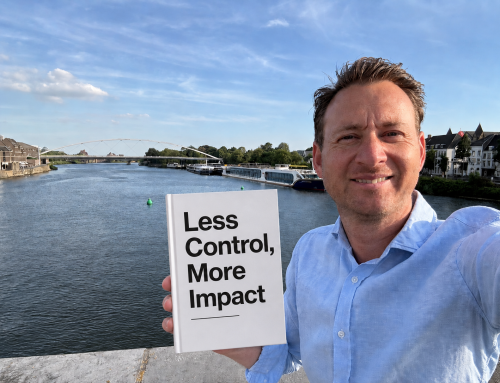
In my book research, I have identified 28 reasons why leaders hold on too long. All of them collapse into three primal fears – and the first is Performance Loss.
Performance Loss is the fear that performance will collapse without your involvement. It sounds like:
- “They’re not ready yet.” Leaders convince themselves the team still needs oversight, when in reality the team often needs space to grow into responsibility.
- “It’s faster if I do it myself.” It feels efficient in the moment, but it trades long‑term capability for short‑term speed and locks the leader into being the bottleneck.
- “I can’t afford mistakes right now.” This frames errors as threats rather than investments, creating a culture where learning is suppressed and the leader becomes the sole guardian of quality.
Here’s the second‑order effect:
Every time you step in, your team steps back. Every time you solve the problem, they learn not to. Every time you rescue the moment, you reinforce dependency.
Performance Loss keeps leaders in the weeds long after the system needs them somewhere else. It creates a team that waits instead of acts – and a leader who works harder instead of smarter.
Which knot in your world is still being managed when it should be cut?
In the 4th century B.C., the army of Alexander the Great entered the Persian city of Gordium. There, he encountered a chariot tied to a pillar with an impossibly complex knot. Legend said: whoever untied it would become ruler of Asia.
For generations, leaders had tried to untie it. They studied it, analyzed it, debated it.
Alexander took one look, drew his sword, and cut straight through the knot.
He didn’t form a Gordian Knot Committee. Alexander didn’t request reports, feasibility studies or expert opinions. He didn’t optimize the knot, he simply cut the knot.
The Gordian Knot is not a story about force. It’s a story about refusing to be trapped by complexity.
And leaders today face their own knots – not ropes, but dependencies, bottlenecks, decision loops and performance risks that keep them involved long after they should have stepped back.
“Performance Loss keeps leaders in the weeds long after the system needs them somewhere else”
In my book research, I have identified 28 reasons why leaders hold on too long. All of them collapse into three primal fears – and the first is Performance Loss.
Performance Loss is the fear that performance will collapse without your involvement. It sounds like:
- “They’re not ready yet.” Leaders convince themselves the team still needs oversight, when in reality the team often needs space to grow into responsibility.
- “It’s faster if I do it myself.” It feels efficient in the moment, but it trades long‑term capability for short‑term speed and locks the leader into being the bottleneck.
- “I can’t afford mistakes right now.” This frames errors as threats rather than investments, creating a culture where learning is suppressed and the leader becomes the sole guardian of quality.
Here’s the second‑order effect:
Every time you step in, your team steps back. Every time you solve the problem, they learn not to. Every time you rescue the moment, you reinforce dependency.
Performance Loss keeps leaders in the weeds long after the system needs them somewhere else. It creates a team that waits instead of acts – and a leader who works harder instead of smarter.
Which knot in your world is still being managed when it should be cut?