With the year end approaching rapidly, I’ve almost completed my objective to read 15 books this year.
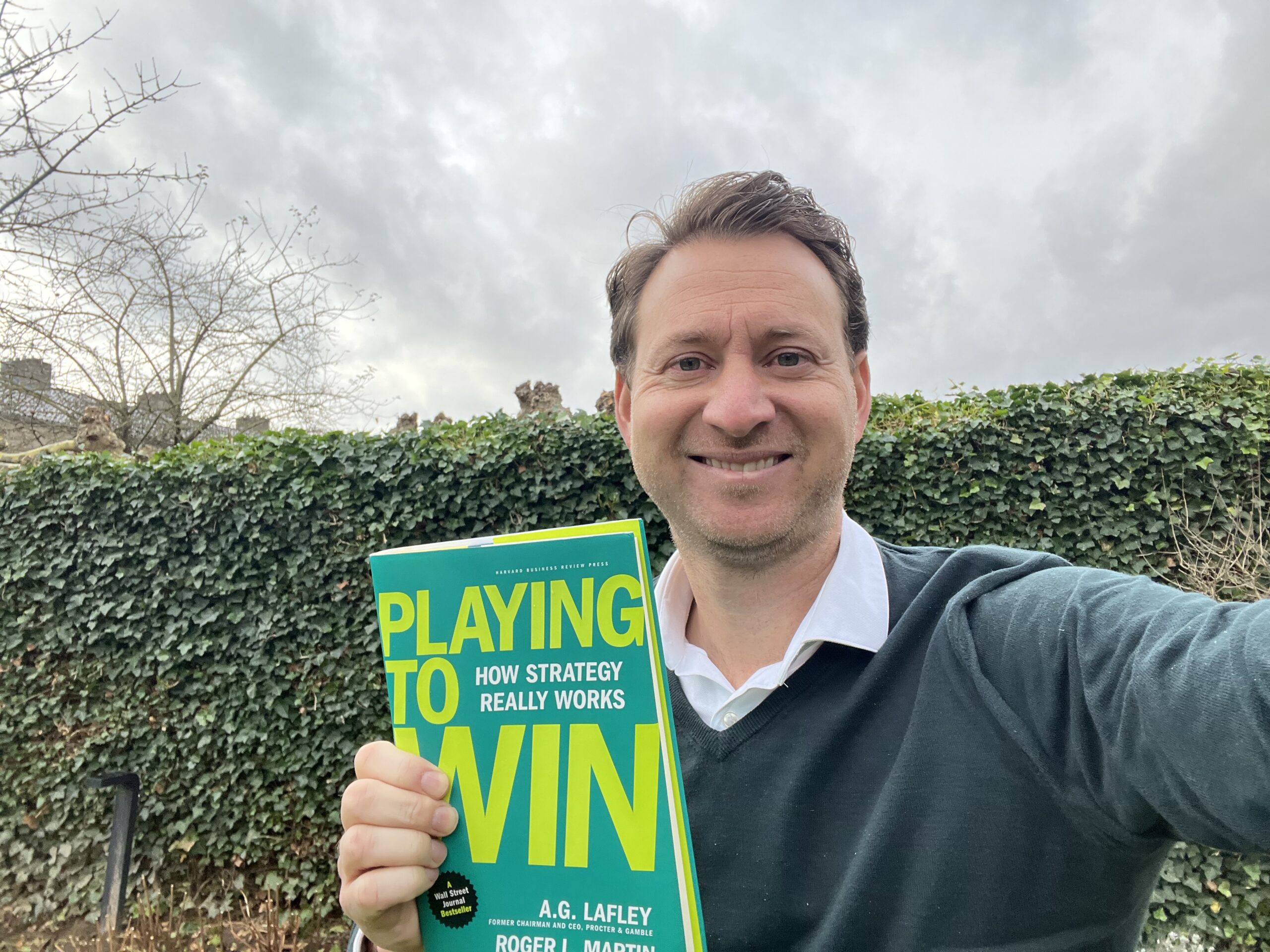
The last book I read was “Playing to Win: How Strategy Really works”, co-authored by A.G. Laffley (former CEO Proctor & Gamble) and Roger L. Martin (former dean Rotman School of Management).
Under Lafley’s leadership, P&G sales doubled, profits quadrupled and market value was increased by more than $100 billion in just 10 years. Lafley worked in close partnership with Martin to achieve one of the most successful corporate turnarounds of the past century.
In “Playing to Win”, the authors demonstrate how leaders in organizations of all sizes can link daily actions with larger strategic goals that drive business success; where to play and how to win.
They make the strategy playbook simple by creating a set of 5 essential strategic choices that will move you ahead of your competition, when applied in an integrated way. These 5 questions are:
“It’s relatively easy to agree on what will be done, the deeper and courageous conversations emerge when deciding on what will not be done.”
- What is our winning aspiration?
- Where will we play?
- How will we win?
- What capabilities must we have in place to win?
- What management systems are required to support our choices?
One of the most compelling aspects of “Playing to Win” is its sharing of actual anecdotes and the practical elements. For example, Martin offers insights into an entirely new methodology for thinking through choices. Rather than having people attempt to convince others, he created a framework so that the option themselves did the convincing (or failed to do so).
What is my take-away?
Reflecting on the insights of this book, it reminds me that strategy is not complex, yet it is hard to execute. It’s hard because it forces leaders to make specific choices about the future.
In my experience, what makes strategy even harder to execute is that it requires choosing what you will not do to achieve success. It’s relatively easy to agree on what will be done, the deeper and courageous conversations emerge when deciding on what will not be done, or what will be discontinued.
Hence, my question to you is:
What’s the toughest “not-to-do” choice you’ve made recently?
With the year end approaching rapidly, I’ve almost completed my objective to read 15 books this year.
The last book I read was “Playing to Win: How Strategy Really works”, co-authored by A.G. Laffley (former CEO Proctor & Gamble) and Roger L. Martin (former dean Rotman School of Management).
Under Lafley’s leadership, P&G sales doubled, profits quadrupled and market value was increased by more than $100 billion in just 10 years. Lafley worked in close partnership with Martin to achieve one of the most successful corporate turnarounds of the past century.
In “Playing to Win”, the authors demonstrate how leaders in organizations of all sizes can link daily actions with larger strategic goals that drive business success; where to play and how to win.
They make the strategy playbook simple by creating a set of 5 essential strategic choices that will move you ahead of your competition, when applied in an integrated way. These 5 questions are:
“It’s relatively easy to agree on what will be done, the deeper and courageous conversations emerge when deciding on what will not be done.”
- What is our winning aspiration?
- Where will we play?
- How will we win?
- What capabilities must we have in place to win?
- What management systems are required to support our choices?
One of the most compelling aspects of “Playing to Win” is its sharing of actual anecdotes and the practical elements. For example, Martin offers insights into an entirely new methodology for thinking through choices. Rather than having people attempt to convince others, he created a framework so that the option themselves did the convincing (or failed to do so).
What is my take-away?
Reflecting on the insights of this book, it reminds me that strategy is not complex, yet it is hard to execute. It’s hard because it forces leaders to make specific choices about the future.
In my experience, what makes strategy even harder to execute is that it requires choosing what you will not do to achieve success. It’s relatively easy to agree on what will be done, the deeper and courageous conversations emerge when deciding on what will not be done, or what will be discontinued.
Hence, my question to you is:
What’s the toughest “not-to-do” choice you’ve made recently?